
“It seems as though at least once a week I have an interaction where somebody mentions how hard it is to get tone right in an email. I disagree. The problem is that it’s hard to get tone right in writing.”
Gideon Lewis-Kraus (via twcwelcomecenter)
Yupppppp
(via yeahwriters)
“The imagination needs moodling – long, inefficient, happy idling, dawdling, and puttering.”
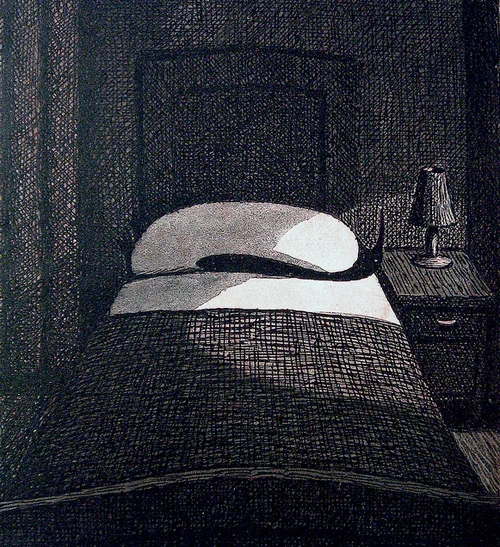
Franco Matticchio, это замечательный пингвин!

“He could not get used to going to the girl’s apartment.”
“A short story must have a single mood and every sentence must build towards it.”
“Don’t make it real, make it believable. And because the real world seldom makes sense, don’t rely on it for your inspiration.”
Lets do this.
I spent the last couple of days having my pervious piece critiqued and feeling rather down and out about my first attempt. Last night, I realized I needed to let my original approach or attempt go. I have a feeling that this will be a valuable lesson going forward. I was to attached to things that weren’t working and to bummed that I didn’t get it right the first time. This expectation is of course ridiculous and not appropriate. Moving forward looks a lot more charming then it did two days ago. I’m going to destroy my text book reading today! BOOM!

Henry Miller’s Work Schedule, 1932-33
Struggling writer... sorta
Working my way through the textbook “Writing Picture Books” by Ann Whitford Paul. It has been incredibly helpful but the further I get the more annoyed I am with my previous story! I was going chapter by chapter through the book and applying the tasks/lessons to the story I had written but now I think I’ll just scratch that approach. Instead I think it may be better to read through the book and then write a new story before revisiting my first. Confused yet? Thrilling I know.
Everyday I am more amazed at the techniques that go into writing children’s books. Learning these and seeing that these are what makes the difference between a good and a GREAT book has been inspiring, humbling, and daunting. Anyone like to recommend how to over come the hill of feeling defeated before you’ve even started? YIKES!
A bit annoyed that I do not have access to a library in the United States, I need to read some more of the classics! Hopefully I can find an english speaking library here with a decent collection… the pains of living abroad. Can anyone recommend their favorite classic picture book?

Drafting... not like an architect
I’ve been reading through one of my textbooks as I go about redrafting my first story about Jerome, the traveling elephant. I’ve posted it on a couple of forums and I’ve been lucky enough to find someone who is willing to critique my work. I’ve also sent a couple of drafts around to the unsuspecting friend and family members. I am lucky enough to family members (siblings) who are under the age of 13… I am looking forward to their response the most. On to the next draft… working the words so that the story sounds more poetic. Wasn’t expecting this process to be so consuming. I LOVE IT.

A cartoon by Drew Dernavich. For more cartoons from this week’s issue: http://nyr.kr/1bTqkV3
First Draft, One Critique....
Through my first draft of my first go at a children’s book. I’ve never been a very patience person, however, some how I’ve all the patience in the world for this process. Maybe I’ve gained patience out of the fear of finding myself at the end and it all failing.
Next task, rewriting the story from a different point of view.


The latest session of Roy Peter Clark’s “Writing Tools” online chat at the Poynter Institute focused on the subject of his forthcoming book How to Write Short: Word Craft for Fast Times. Here are just a few of the highlights. Look for the book on August 27th.
- [S]hort poems at their best require three things: focus, wit, and polish. Focus means it’s about one thing. Wit means there is signs of a governing intelligence. Polish means that you’ve revised it — at least a bit. Same should apply to writing for social networks.
- Twitter is just an empty vessel. How we use it depends upon our craft, purpose, and audience.
- [I]n my study of short writing, I found that over the course of 3,000 years of written history, that we have always chose short writing to say the most important things.
- It may be impossible not to sacrifice depth in short writing, but that doesn’t mean writers don’t shoot for depth.
- I think the shorter the writing the MORE grammar matters. Loose grammar and punctuation can be less noticeable in the middle of a ton of text. But in a short work — bad stuff stands out.
Read the full conversation here.
The first draft or 500 words
Today I’m setting down to write my first draft… Oddly, I was concerned with what I was going to wear today.
“An English major is much more than 32 or 36 credits including a course in Shakespeare, a course on writing before 1800, and a three-part survey of English and American lit. That’s the outer form of the endeavor. It’s what’s inside that matters. It’s the character-forming—or (dare I say?) soul-making—dimension of the pursuit that counts… The English major is, first of all, a reader… The English major reads because, as rich as the one life he has may be, one life is not enough. He reads not to see the world through the eyes of other people but effectively to become other people. What is it like to be John Milton, Jane Austen, Chinua Achebe? What is it like to be them at their best, at the top of their games?
English majors want the joy of seeing the world through the eyes of people who—let us admit it—are more sensitive, more articulate, shrewder, sharper, more alive than they themselves are. The experience of merging minds and hearts with Proust or James or Austen makes you see that there is more to the world than you had ever imagined. You see that life is bigger, sweeter, more tragic and intense—more alive with meaning than you had thought.
Real reading is reincarnation. There is no other way to put it. It is being born again into a higher form of consciousness than we ourselves possess.
”

Daily Rituals: How Artists Work by Mason Currey
“Sooner or later, the great men turn out to be all alike. They never stop working. They never lose a minute. It is very depressing.”
—V.S. Pritchett“A modern stoic knows that the surest way to discipline passion is to discipline time: decide what you want or ought to do during the day, then always do it at exactly the same moment every day, and passion will give you no trouble.”
—W.H. AudenAn addictive read—just 1-3 page summaries of the routines of various artists, scientists, etc. It’s fun to go through and get ideas for your own work, but mostly it’s just fascinating to hear about how people work(ed). (cf. Studs Turkel’s Working.)
Here are a few bits that rang true to my own experience:
A little bit of work every day adds up.
Anthony Trollope: “three hours a day will produce as much as a man ought to write.”
Martin Amis: “Two hours. I think most writers would be very happy with two hours of concentrated work.”
Gertrude Stein: “If you write a half hour a day it makes a lot of writing year by year.”
Read your work aloud.
Simply reading your work aloud gives you enough distance from it that you can hear what’s really going on. Mark Twain would read his day’s work aloud to his family after dinner. Maya Angelou would read her stuff to her husband, but not invite him to comment. (Quentin Tarantino does the same—he reads scripts to his friends, but doesn’t invite feedback. “I don’t want your input, heavens forbid…”)
Eat a good breakfast.
I’d like to adopt Carl Jung’s breakfast: “coffee, salami, fruits, bread and butter.”
A little procrastination can go a long way.
Gerhard Richter: “I love making plans. I could spend my life arranging things. Weeks go by, and I don’t paint until I can’t stand it any longer…perhaps I create these little crises as a kind of secret strategy to push myself.”
Joseph Heller: “Television drove me back to Catch-22. I couldn’t imagine what Americans did at night when they weren’t writing novels.”
Pressure makes you get the work done.
Edward Abbey: “I hate commitments, obligations and working under pressure. But on the other hand, I like getting paid in advance and I only work under pressure.”
Go for walks.
Charles Dickens took a 3-hour walks every day at 2PM, “searching for some pictures I wanted to build upon.”
Wallace Stevens commuted on foot three or four miles in between his house and his day job, and took an hour long walk at lunch. He composed his poems on these walks, scribbling on envelopes he had stuffed in his pockets.
Here are some other random bits I found interesting:
- Francis Bacon would read cookbooks in bed to fall asleep.
- Morton Feldman on what John Cage taught him: “He said that it’s a very good idea that after you write a little bit, stop and then copy it. Because while you’re copying it, you’re thinking about it, and it’s giving you other ideas. And that’s the way I work. And it’s marvelous, just wonderful, the relationship between working and copying.”
Here are some great quotes:
- Gustave Flaubert: “It’s no easy business to be simple.“
- Woody Allen: “I think in the cracks all the time. I never stop.”
- Glenn Gould: “I don’t approve of people who watch television, but I am one of them.”
- Phillip Roth: “I’m like a doctor and it’s an emergency room. And I’m the emergency.”
- Stephen Jay Gould: “It’s not work, it’s my life. It’s what I do. It’s what I like to do.”
- Bernard Malamud: “The real mystery to crack is you
Funny enough, out of all the routines, I thought Georgia O’Keefe’s was the most lovely. She lived out in the New Mexico desert and got up every morning to watch the sun come up…
I do wonder about the book’s structure. At first, I could see the way Currey was DJing, the juxtapositions he was trying to make, but later on things got a little random. One thing I liked about his blog was that you could click tags to read about artists with different habits: procrastinators, early risers, nap takers, etc. But that’s the nature of the beast when you translate an essentially non-linear, fluid database into a linear, fixed form like a book…
Anyways, it’s a fun read.
Filed under: routine, my reading year 2013
Day Uno

Today I’ve decided to really start the ball rolling on my first book. Daunting. I’m not sure if its the jet lag (I just flew in from Chicago to Prague yesterday) or the cold medicine I’m taking but I’m terrified. With that I’m turning, like the trained student/monkey I am, to text books to ease my nerves before taking the biggest test I’ve ever sat. Heres to day one.